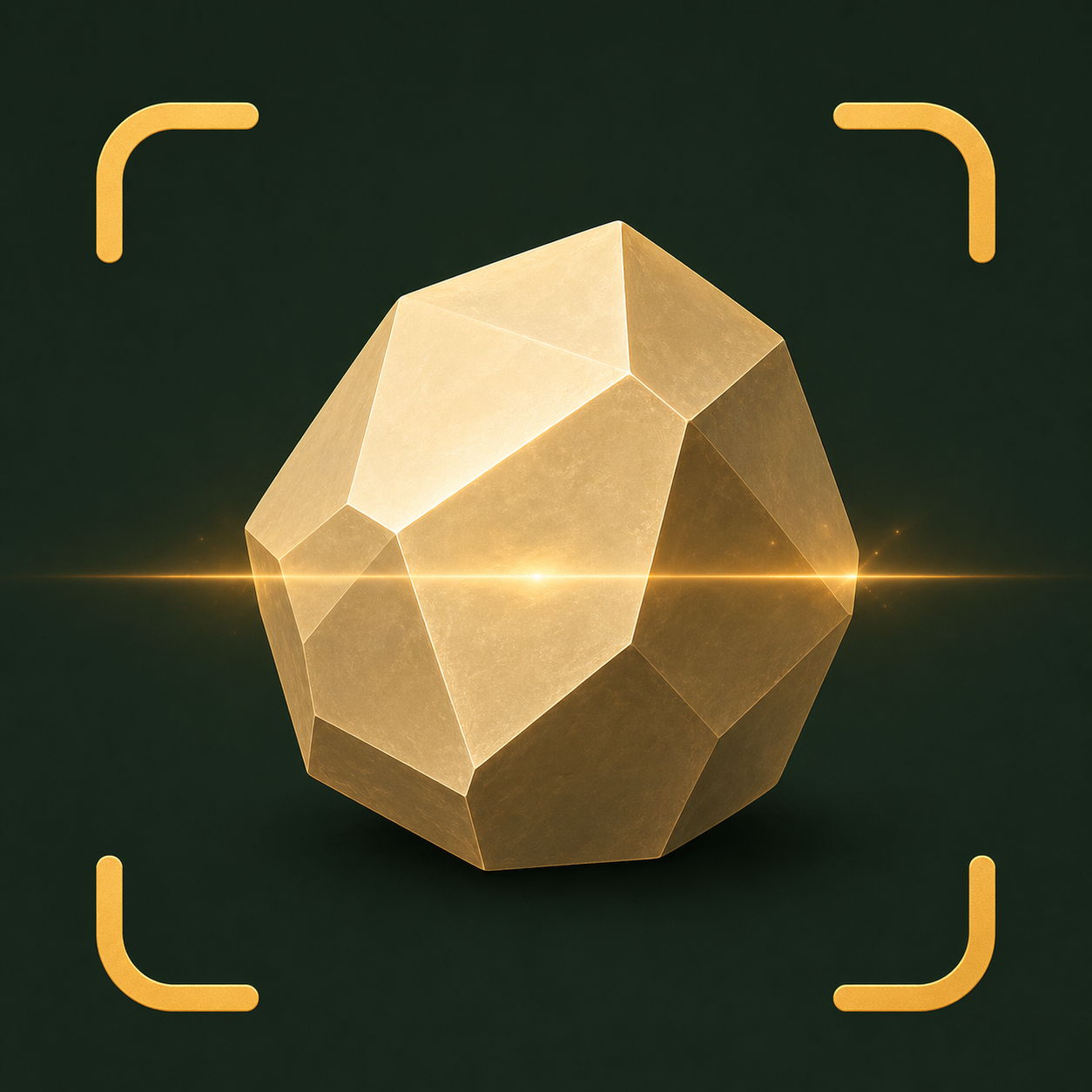
Goldstone
Goldstone is a manufactured glittering glass, usually coppery brown to orange, sold as beads, cabochons, and tumbled stones.

Goldstone properties at a glance
| Type | Materials |
|---|---|
| Chemical formula | Silica glass with copper inclusions |
| Mohs hardness | 5.5 |
| Crystal system | amorphous |
| Luster | vitreous |
| Streak | White to colorless |
| Cleavage | None |
| Fracture | Conchoidal |
| Specific gravity | 2.5 |
| Transparency | opaque |
| Common colors | Copper, Brown, Orange, Gold, Sparkly |
| Rarity | common |
Geology & background
Made as glass under reducing conditions so tiny copper crystals create a glittering effect.
Goldstone has a long history as decorative aventurine glass used for jewelry and ornamental objects.
How to identify Goldstone
- Look for dense coppery sparkle in a glassy brown to orange body.
- Check chips or edges for glassy conchoidal fracture.
- Do not confuse Goldstone with natural Sunstone or Aventurine.
Where Goldstone is found
Goldstone is a retail or manufactured material label; record seller disclosure and provenance when known.
How much is Goldstone worth?
| Entry-level specimen | $3 |
|---|---|
| Typical collector specimen | $15 |
| Premium specimen | $80+ |
Value is usually decorative or lapidary-market value, not natural rarity. Price depends on size, polish, color effect, condition, seller disclosure, and craftsmanship.
Common uses
- Beads
- Tumbled stones
- Cabochons
- Decorative objects
Interesting facts
- Goldstone is also called aventurine glass.
- Its sparkle comes from tiny metallic inclusions.
- It is often mistaken for or marketed like a natural stone.
Care & safety
Goldstone may be glass, coated, dyed, or otherwise manufactured; handle it as a decorative material unless verified otherwise.
Avoid inhaling dust. Do not cut, grind, or polish unknown specimens without eye protection and a properly rated respirator.


_4.jpg?width=320)

